Tourist Snaps Photo of 120-Million-Year-Old Dinosaur Footprint
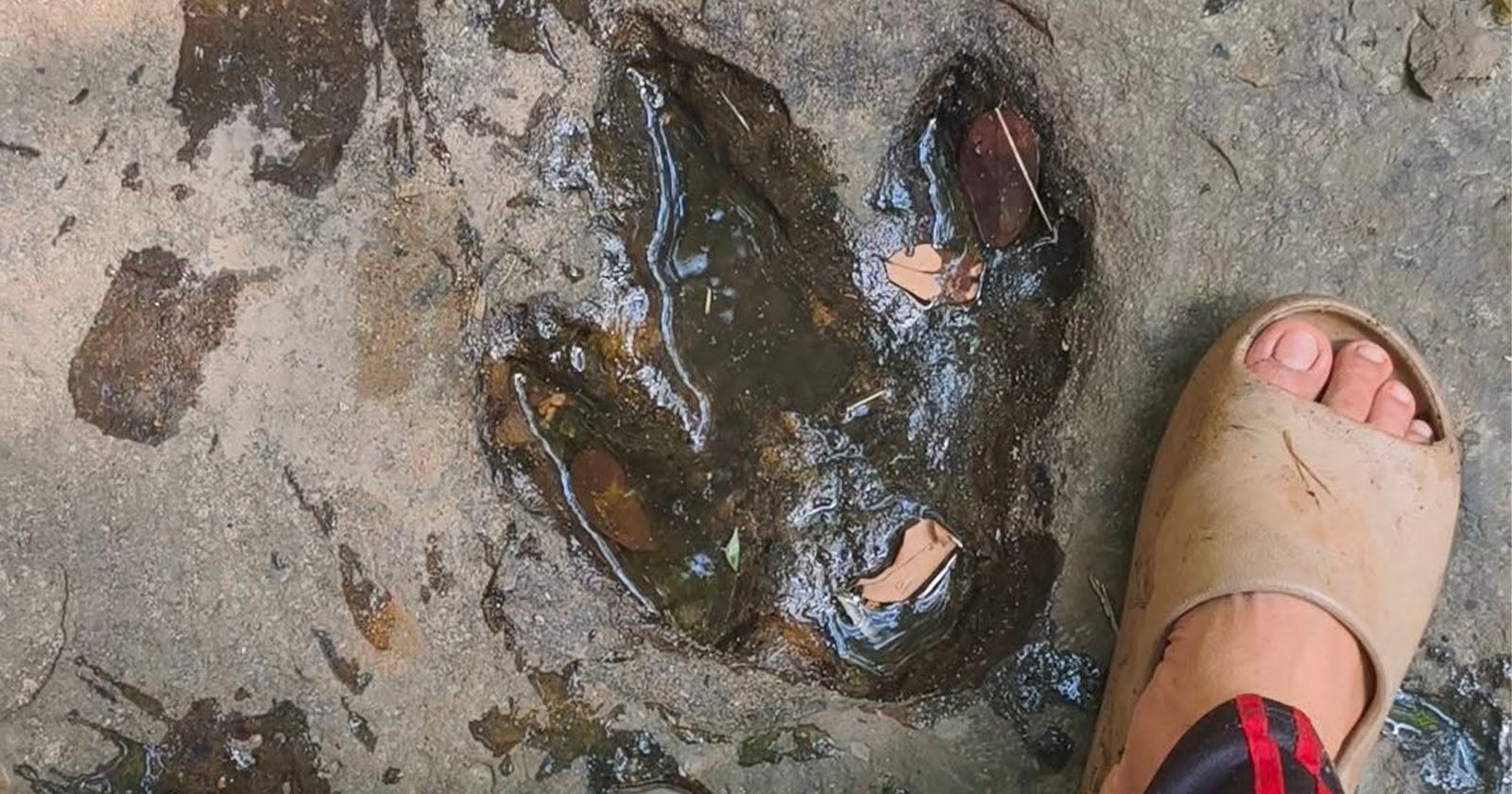
A footprint belonging to a 20-foot-long carnivorous theropod dinosaur that walked around on its hind legs has been discovered in Thailand.
Pichai Prathetsena was visiting Phu Phra Bat National Park with his family when he spotted the unusual marks while exploring a stream.
He took a photo of them and uploaded it to a Thai Facebook page called “What is this creature?” The Thai government saw Prathetsena’s post and contacted him.
This week, the Department of Mineral Resources visited the location and discovered six dinosaur footprints dating back 120 million years.
The three-toed footprints measure 11 inches (29 centimeters) long and 10 inches (26 centimeters) wide. Researchers estimate the dinosaur stood about 4.5 feet (1.42 meters) tall at the hip and measured about 21 feet (6.3 meters) long.
“The find includes a single trail with a total of six prints on the Phu Phan formation, dating back approximately 120 million years to the Early Cretaceous period,” Thailand’s Department of Public Relations says.
The park has been closed to tourists while authorities investigate and determine how to protect the footprints, known as trace fossils.
“Furthermore, strategies are being developed to mitigate water erosion, with plans to potentially transform the site into a significant national hub for education, research, and geological and paleontological tourism,” the Department of Mineral Resources says on Facebook.
According to the Bangkok Post, the Department also explained how it is possible that a dinosaur footprint can survive for hundreds of millions of years.
Trace fossils form when an animal leaves an impression in soft ground or sediment that later hardens. In this case, layers of sediment gradually covered the dinosaur’s footprint, preserving it as the sediment turned to rock.
Unlike skeletal fossils, trace fossils give researchers a glimpse into how prehistoric animals moved and behaved. It’s possible to estimate an animal’s gait, including speed, stride length, and movement patterns. It may also reveal whether the species moved in a group or was solitary.
Members of the public can be incredibly useful when it comes to researching animals and nature: in September, a previously unknown species of plant was accidentally discovered after a tourist in Portugal posted her photograph online. Meanwhile, in Colombia, an Instagram selfie accidentally led to the discovery of a giant waterlily species.