'Big-Hearted' War Photographer Paul Conroy Dies Age 61
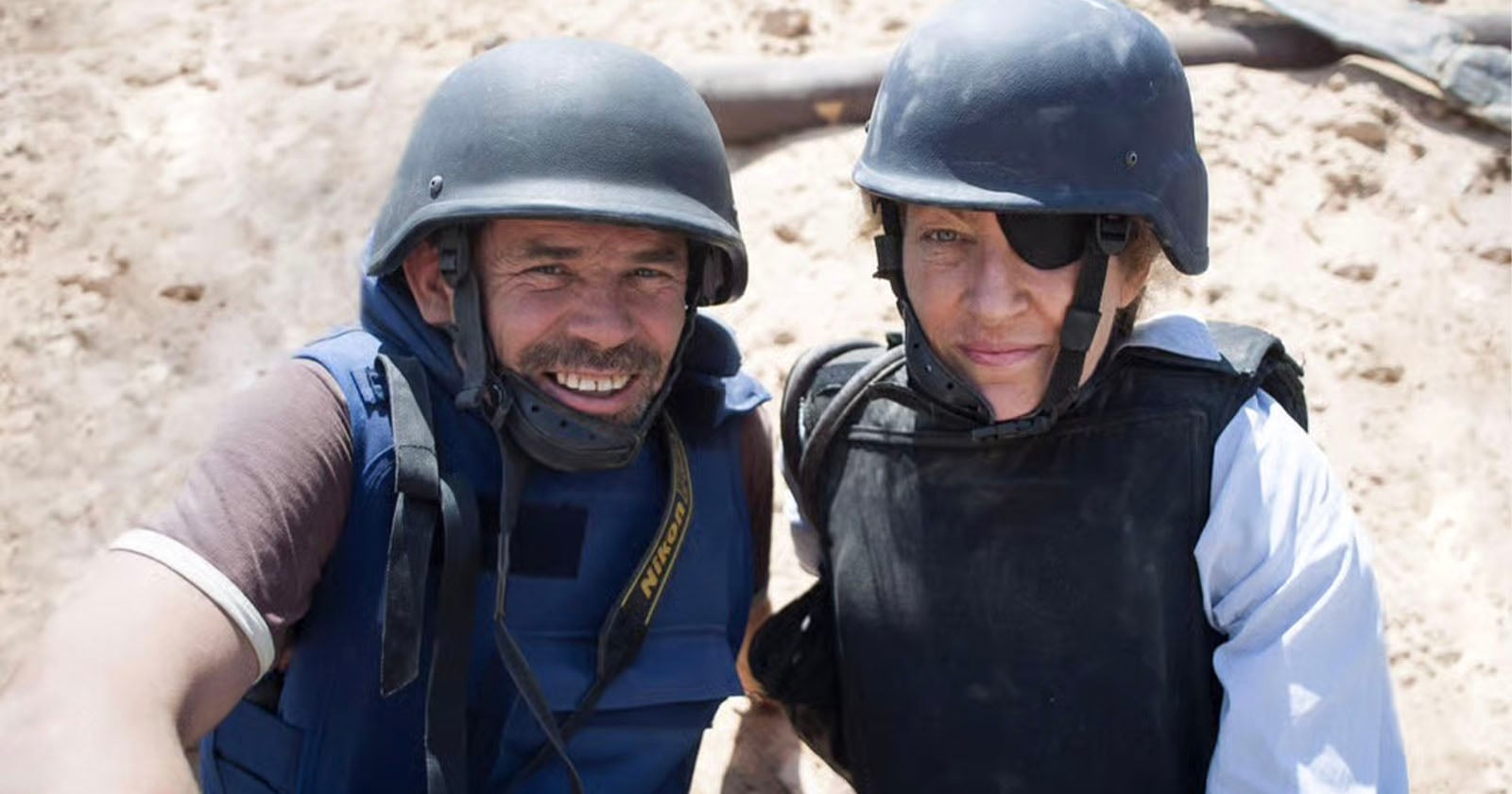
Acclaimed war photographer Paul Conroy died this week of a heart attack at age 61.
Conroy was in Homs in 2012 covering the Syrian uprising when the building he and other journalists were bombed by the Syrian government.
American journalist Marie Colvin was killed alongside French photographer Rémi Ochlik in the attack. Conroy was badly injured and was hospitalized for five months. The events were made into a 2018 film called A Private War; Jamie Dornan played Conroy. That same year, a documentary, Under the Wire, featuring Conroy was released.
As well as Syria, Conroy covered wars in Libya, Congo, and Afghanistan. According to The Times of London, Conroy had recently been living in Ukraine, training journalists in battlefield first aid. He died while visiting family on a trip to the U.K.
Conroy has been warmly remembered by colleagues and friends. Amnesty International called him a “courageous and compassionate storyteller.” Conroy’s brother Alan tells the BBC that all his life he wanted to make a difference. “He found great pleasure in exposing wrongs,” Alan says.
The Liverpool-born photographer was passionate about shining a light on the ills of the world. Talking about Syria in 2012, he said: “These beautiful people who were being slaughtered, I wanted to tell their story.”
As well as Ukraine, he had recently been in Cuba on a tourist visa following the Venezuelan president Nicolás Maduro’s recent capture by the United States.
“The international community needs to rummage down the back of the diplomatic sofa, find its mislaid sense of justice, and act before the crisis unfolding here slides from slow-motion emergency into full-blown catastrophe,” Conroy writes in his final photo essay.
Conroy was a trustee and founding member of the Frontline Club, a London hub for war journalists.
“He was one of our trade’s great characters: a Scouser [someone from Liverpool] with a big heart who invariably put others before himself and approached his work with courage, humanity and professionalism,” Vaughan Smith, founder of the Frontline Club, tells The Times.
“Paul’s health never fully recovered from Homs, but that did not stop him. When Russia’s full-scale invasion of Ukraine began, Paul led the Frontline Club’s initiative to train Ukrainian journalists in battlefield first aid.
“It was typical of him, using his own hard-won experience to protect others. He continued to work in conflict zones with the same courage and commitment, most recently in Ukraine and Cuba.”