Mandler's First Recreated Classic Leica Lens Sold Out Almost Immediately
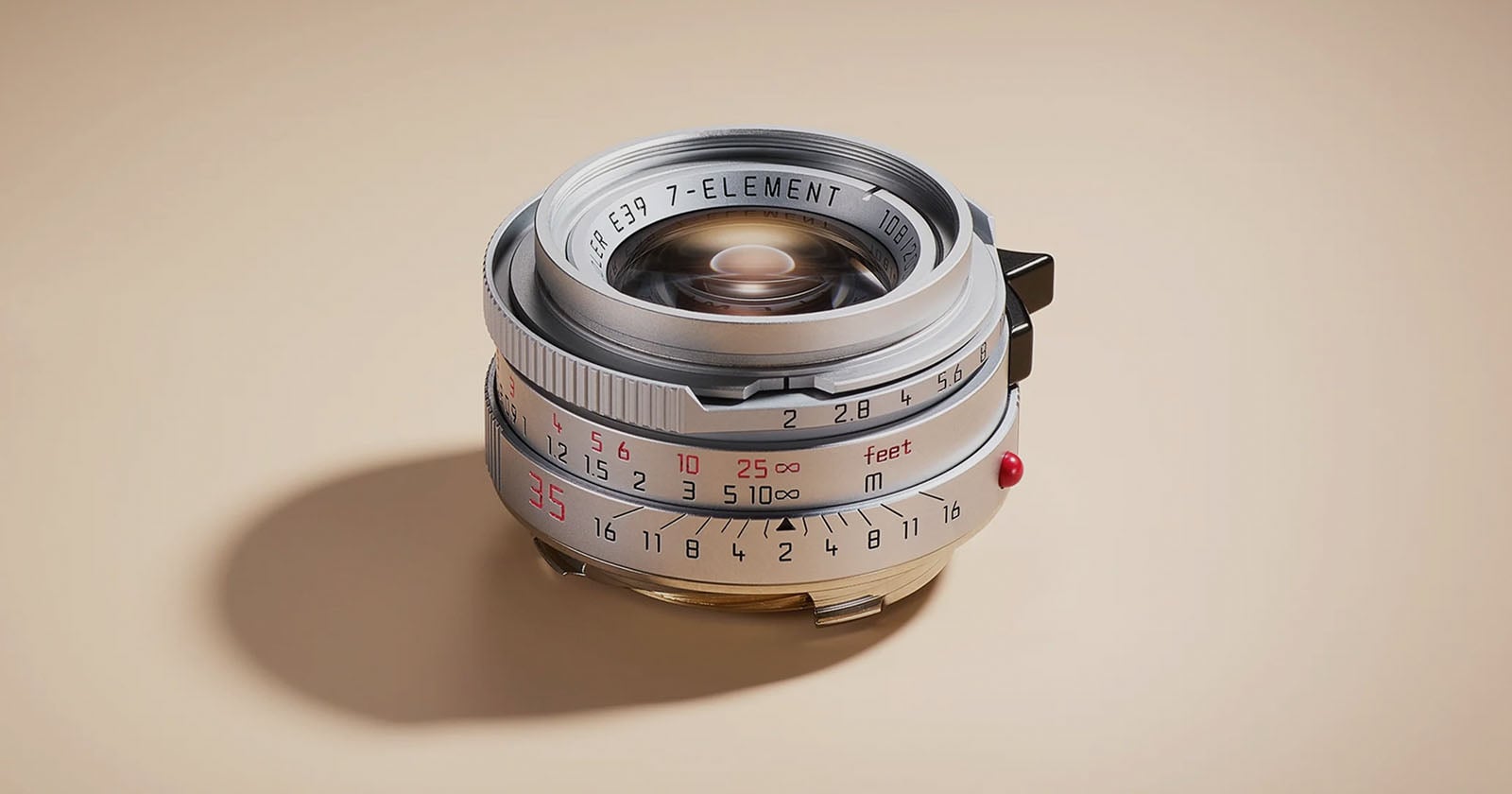
Chinese newcomer Mandler announced its first lens last May, the Mandler 35mm f/2 “7 Elements.” The lens faithfully recreates the classic Leica Summicron 35mm f/2 at an extremely aggressive price of about $350. It went on sale this week and sold out almost immediately.
As Leica Rumors reports, the lens sold out in very short order, and the company is already preparing its next batch, expected to arrive in March.
Mandler’s first batch featured an aluminum version of the lens in black and silver finishes in both Leica M and LTM mounts, starting at $348, and a pricier chrome-plated brass variant that is only for Leica M and comes in just silver for $538. The chrome-plated brass version sold out in just a few hours, while the aluminum version lasted only slightly longer.
“Due to a large number of orders received in a short period of time, the product is currently sold out,” Mandler says of both versions of its debut 35mm f/2 “7 Elements” lens. “However, please rest assured that we will restock as soon as possible.”
Photographers who missed out can sign up to be notified via Mandler’s website.
A post shared by Mandler lens (@mandlerlens)
While a lens selling out is not necessarily news in and of itself, this is a particularly interesting situation. Not only is there more information about the Mandler 35mm f/2 “7 Elements” lens available since PetaPixel reported about nine months ago, including sample photos, but the Mandler 35mm f/2 reflects a broader trend in the industry: Chinese lens companies recreating classic, often extremely rare and expensive Leica lenses at accessible prices. It is a fascinating trend, and one that gives photographers more M-mount options than ever before, assuming they put new lenses in their online shopping cart quickly enough, at least.
“Mandler was born as a tribute to the masters.We do not chase trends; we remain faithful only to pure optics. We fuse China’s professional modern optical engineering with the legendary spirit of classic lenses. Each piece of glass speaks of reverence for light, and every frame carves an eternal moment in time.This is more than a photographic instrument — it is a visual symphony where cutting-edge technology carries forward a century of craftsmanship,” Mandler says, promising that through “nanometer-level precision,” it brings the “soul of classical aesthetics” back to life.
Mandler takes its very name from Leica’s rich, storied history. The company is named after Dr. Walter Mandler (1922-2005), who designed more than 45 of Leica’s most beloved lenses during his career, including the Summicron 35mm f/2 from which the Mandler 35mm f/2 draws heavy inspiration.
In the case of its first lens, the Mandler 35mm f/2, the company has sought to recreate the Leica Summicron 35mm f/2 lens released in the late 1970s. The optical formula, which comprises seven elements in five groups in a double Gaussian layout, is identical to the Summicron 35mm f/2, at least on paper. Like Leica’s classic, Mandler’s lens includes a 10-bladed aperture.
Where the lenses differ is in the use of modern, high-standard optical glass. Mandler says it “builds upon the classic design” by using lower-dispersion glass and optimized multi-layer coatings.
“This ensures its image quality meets the high standards demanded by contemporary digital photographers,” the company explains.
The lens maintains old-school appeal, though not only in its physical appearance, which oozes Leica style, but also in its image rendering. The lens promises swirly bokeh, a natural cat’s-eye effect around the edges, and a subtle vignette at fast apertures.
It’s clear that these traits — and the accessible price point — have made the Mandler 35mm f/2 a very attractive option for Leica M-mount photographers and for those who like using adapted manual-focus lenses on their mirrorless cameras. The expected drop in March may sell out just as fast.
One thing is for sure: this is far from the last time an upstart Chinese lens company will faithfully recreate a classic Leica M-mount lens. That market has plenty of headroom left.
Image credits: Mandler