Why You Should Embrace Abstract Photography
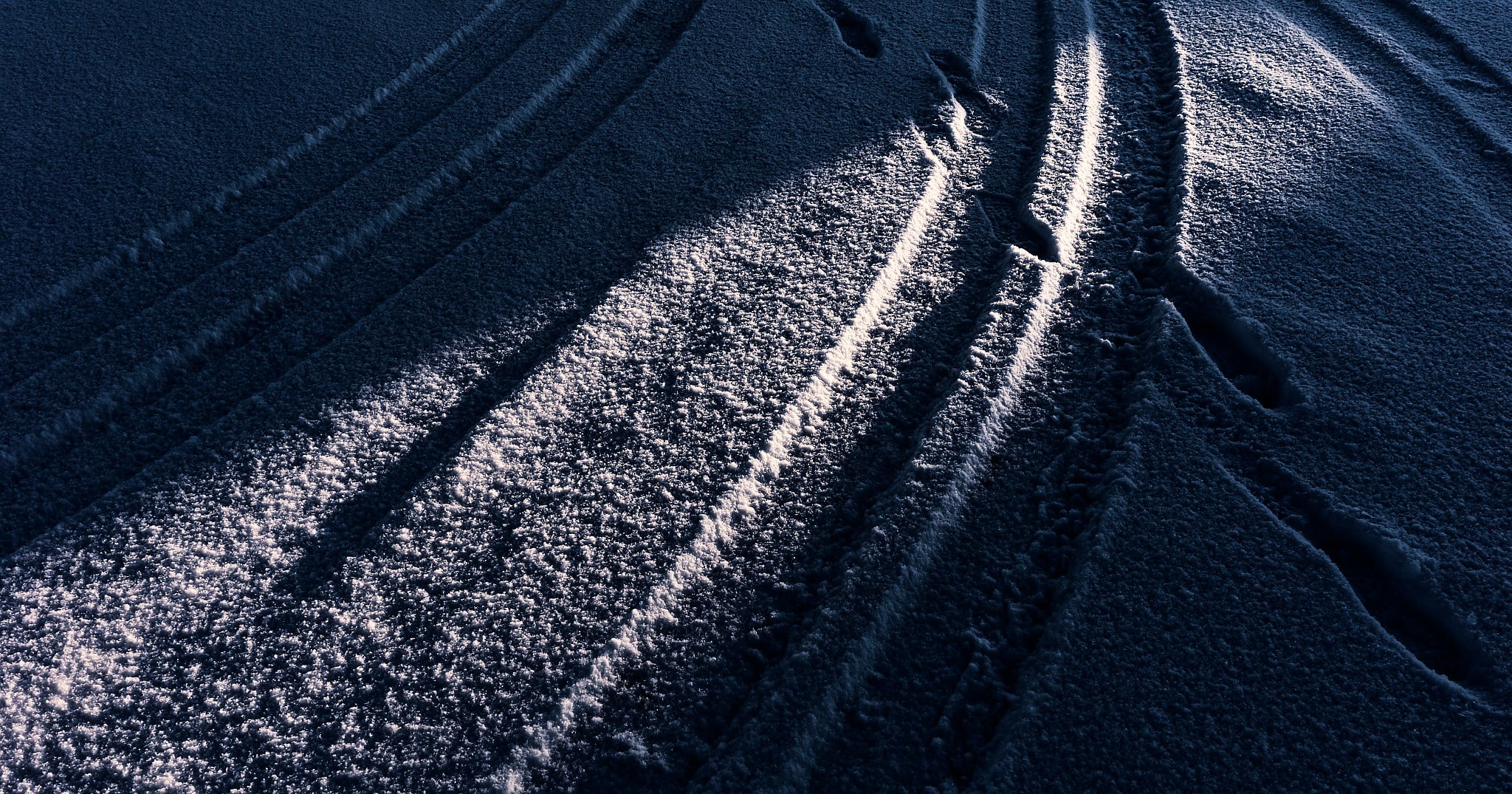
Abstract photography is one of those things that you either love or hate. Either way, it’s a genre worth dabbling in, as you can learn a lot about your camera from it.
If I go back in time to my youth, I was not enthralled by abstraction. In fact, I found it incomprehensible. However, my interest in abstract photography grew from trying to understand what abstract art was about. To appreciate it in photography, you must be aware of its broader context in art and how art movements evolved from one another.
Abstract art is where shapes, colors, lines, and textures are used independently of real‑world representations. An abstract artwork can be partially or fully abstract. The former is where the image is loosely based on recognisable forms, and the latter is where there is no reference to the visible world whatsoever.
It has evolved from much further back than many imagine. It can be argued that its roots lie in the Romanticism movement in the 19th Century. Artists such as J.M.W. Turner moved away from realism and began emphasising mood and atmosphere through light and color rather than realistic details in their paintings. From there, it advanced into Impressionism with artists such as Claude Monet, Pierre‑Auguste Renoir, and Camille Pissarro. Then came the Post Impressionists. Vincent van Gogh and Paul Cézanne used expressive color, with the latter reducing geometric forms, which greatly influenced Cubism a few decades later.
Picasso led the field in Cubism, in which reality was reduced to geometric shapes, broken and presented from multiple viewpoints.
More movements followed, including Futurism, e.g., Umberto Boccioni and Giacomo Balla, who were abstracting reality into dynamic force‑lines and speed. Then, Abstract Expressionism was the first fully American avant-garde movement, focusing on gesture, movement, and monumental scale, with artists such as Jackson Pollock, Willem de Kooning, and Mark Rothko.
In turn, Rothko’s Color Field abstraction led to Color Field Painting, which expressed mood and spirituality and influenced the Minimalists such as Donald Judd, Agnes Martin, and Dan Flavin.
Contemporary Abstract Art is far more diverse. It embraces technology, global art traditions, and new materials.
That is, of course, a minimal summary, and volumes could be and have been written on the subject.
Abstract photography makes you work for the shot. Getting to grips with composition is absolutely essential. Understanding how to control your camera’s focus and exposure settings is a must, too. However, discovering abstraction is also a great way to learn those photographic essentials, as it removes the distraction of reality. Practicing abstract photography is also a lesson in using imagination and embracing the unusual and extraordinary, breaking away from mundanity.
Abstract art and the Gestalt notion of insight are a natural pairing. Abstract works often sit right on the edge of perception. It is ambiguous, shapeless, and unfamiliar until the viewer suddenly sees something such as a form, a connection, or an emotional logic. This moment of shift is what Gestalt theorists describe as restructuring.
At first glance, photography does not seem to lend itself to abstract art. After all, it is firmly grounded in close representations of reality. Photographers are constantly pushed to achieve ever more accurate colors and tones, and lens sharpness is considered essential.
However, there is a long tradition of abstraction in photography. Like painting and sculpture, photographic abstract art moves away from literal representation. Instead of showing recognisable subjects, it uses light, color, shape, texture, motion, and perspective to create images that seem unfamiliar or ambiguous.
Some argue that abstract art bears no resemblance to or has no immediate association with what we see in the real world. However, I argue differently. I consider the transition from reality to abstraction as a spectrum, not two separate things. Sometimes it is possible to mix reality with abstract photographic effects.
The main characteristics of abstract photography are as follows:
These are typified by close‑ups of paint, stone, rust, skin, foliage, and so on. Most people view the world with a broader vista. Getting the lens very close to the subject isolates it from its surroundings, so it loses context.
Related to that is fragmentation. That involves isolating small parts of a scene to remove context. Telephoto and macro lenses are perfect for this approach.
In abstract art, these can be used to obscure scale or context. Looking for tonal changes and then creating extreme, low- or high-key images by adjusting the exposure compensation can be effective.
Intentional Camera Movement can create impressionist images. It takes a bit of practice to press the shutter while you are moving. You can extend this technique by combining it with simultaneous zooming and refocusing. You need to keep the shutter open long enough to manage that. Start by selecting a slow shutter speed. Do that by shooting in low light. Also, use a tiny aperture and attach an ND filter.
Just as moving the camera with a slower shutter can create interesting abstract effects, so too can photographing moving subjects in that way. People, animals, and vehicles all move quickly and can leave an impression of the subject or light trails showing where they were.
This is when that color becomes the primary subject of the photo. It involves finding blocks, gradients, or color distortions. Isolating areas of bold color on buildings is a classic example, but nature has bold colors, too.
The question “What is your favorite color?” is not so childish when we consider that colors have societal and emotional connections for all of us. For example, I know someone who loves to stand out and wears neon-colored clothing; they also profess to hate beige. Meanwhile, my late mother had a complete distaste for lime green.
It’s also possible to create an abstract by placing objects directly on light-sensitive paper. There are easy-to-use cyanotype kits available that let you make photograms. The following image is a cyanotype by Polish artist, photographer, and jeweler Maya Kot, whose work is well worth exploring as a lesson in abstraction.
Alternatively, if you want to continue using a digital approach, placing an object on a scanner can equally create interesting results.
A post shared by LAKES.BODIES (@lakes.bodies)
Some cameras allow you to take multiple exposures. Overlaying one image over another has long been used in abstract photography. Even if your camera doesn’t allow it, multiple images can be layered in editing tools.
Other abstractions can also arise from exploring editing methods in software.
Creativity comes rarely from discovering something entirely new. It is far more likely to evolve from what has come before. So, experiment and mix different techniques in new and novel ways. Combining, say, ICM with moving subjects, or double exposing a colour gradient with a texture. Anything goes.
Many photographers, from the birth of photography to the present, have dabbled in or dived headlong into abstract photography in its various forms. If you are interested in delving into abstract photography, your time will be well spent searching for and exploring their work.
William Henry Fox Talbot made his “photogenic drawings” using leaves and lace on sensitised paper. Anna Atkins created cyanotype photograms of botanical specimens. Interestingly, her 1843 book is the first to be illustrated with photographs. If you can find a copy of Linda McCartney’s excellent book “Sun Prints,” you’ll also see that she experimented with cyanotypes, creating some surreal abstracts.
Others worth discovering are:
If you want to delve deeper into the contemporary abstract movement, then artists and photographers you might want to check out include: